

The Top 10 Best Spike Lee Films
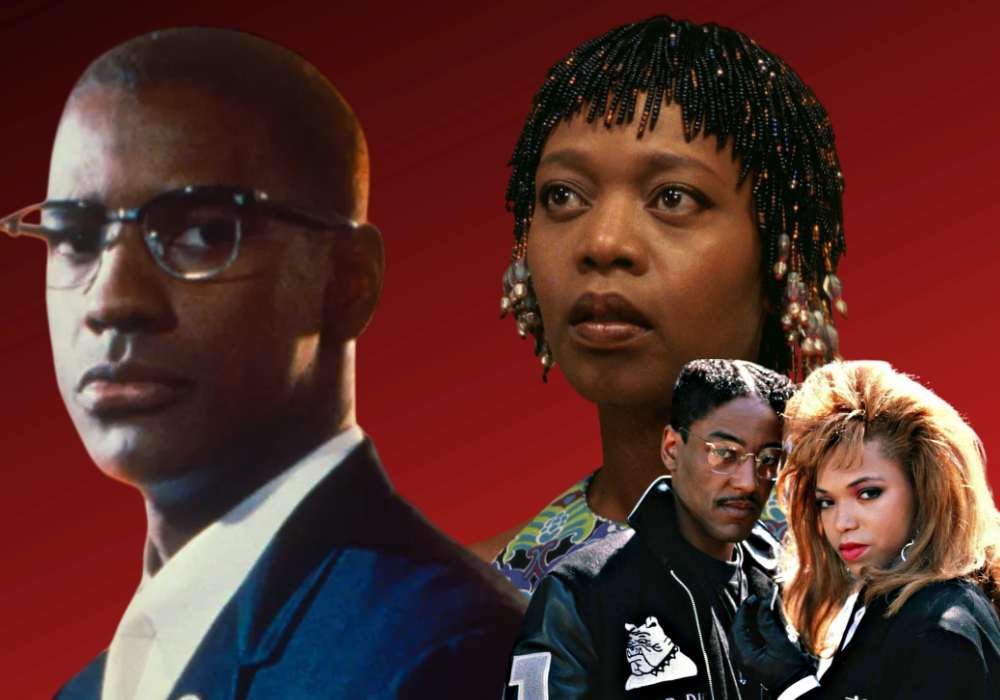
From left to right: Denzel Washington, Alfre Woodard, Giancarlo Esposito, and Tisha Campbell
It would be obvious to say that this man requires no introduction, but here is one anyway. Born to a teacher of arts and Black literature and a jazz musician and composer in Atlanta, Georgia, Shelton Jackson “Spike” Lee started his career in filmmaking with an independent short film titled Joe’s Bed-Stuy Barbershop: We Cut Heads in 1983. Since then, Lee has gone on to create over 20 more feature films, all of which have led to his decorated career as not only one of the best Black filmmakers out there, but a significant auteur and the most consistent director and writer in the history of Hollywood. Lee has also made a handful of documentaries, both films and TV series, and has been credited for featuring notable breakthrough performances of many great actors, such as Denzel Washington, Laurence Fishburne, Samuel L. Jackson, John Turturro, Rosie Perez, and Giancarlo Esposito. Today, some of those very films are the focus of this write-up.
Lee’s films are often defined by the substance within them, the ideas and themes that Lee wants to explore. His writing often tackles race relations, mainly issues within the Black community, which further leads into the exploration of topics such as the role of media in contemporary life, urban crime and poverty, and other political issues. Lee is rarely limited by genre, but his films often bear a signature style, mainly his use of dolly shots, direct-to-camera monologues, vibrant color palettes, and intense energy behind and in front of the camera. This energy often carries over to his scripts, too.
Lee’s accolades are numerous, with an Academy Award, a BAFTA, four Emmy Awards, two Peabody Awards, three Black Reel Awards, and one NAACP Image Award. He, of course, has gotten many nominations as well. This list will go over the 10 films that are perhaps his finest works, analyzing Lee’s quality as an artist in each of them and deciding which one is truly his best work.
10. 4 Little Girls
Year: 1997 | Genre: Documentary
Premise: An American historical documentary about the murder of four African American girls in the 16th Street Baptist Church bombing in Birmingham, Alabama, on Sunday, September 15, 1963. The events inspired the 1964 song “Birmingham Sunday,” written by Richard and Mimi Fariña.
Directing: Perhaps there is no better showcase of Spike Lee’s range as a director than this foray into documentary filmmaking. It certainly requires a careful hand behind the camera as Lee is dealing with real subject matter and has to present it in a way that maintains its importance whilst also informing the audience efficiently and effectively.
It is remarkable, then, that not only does Spike Lee succeed in delivering all this, but also retains the same energetic style that makes him such a distinct filmmaker. His editing choices evoke the anger felt at the events that unfolded. There is a clear passion and intent behind every choice, with an excellent variety of interviews and voices on the subject. Lee perfectly communicates the weight of the tragedy in a way that no other director could.
The film was nominated for an Academy Award for Best Documentary and, in 2017, was selected for preservation by the United States National Film Registry, being deemed as “culturally, historically or aesthetically significant.”
9. She’s Gotta Have It
Year: 1986 | Genre: Comedy/Romance
Premise: Also written and produced by Spike Lee, the film follows Nola Darling, played by Tracy Camilla Johns. She is a young graphic artist living in Brooklyn who must juggle between three different suitors and grapple with the personal consequences of this arrangement.
Directing: Very few filmmakers can boast having a feature-length directorial debut as good as this one. It arguably launched Spike Lee’s career, being made on a low budget of $175,000 and grossing $7.1 million. While certainly forming the basis of Lee’s style, there’s a great sense of experimentation throughout, which gives the film a unique quality that is quite unlike the rest of Lee’s filmography.
The first striking element is, of course, the black and white. It’s an interesting choice that lends the film a lot of authenticity, making it feel more grounded compared to Lee’s other films, which often feature a good amount of theatricality and free camera movements. It allows the characters and dialogue to take center stage, lending greater significance to the film’s focus on love and intimacy. It also brings to light Lee’s talents as a writer and is a great start to an amazing career.
For this film, Lee won the Award of Youth at the 1986 Cannes Film Festival and Best First Feature at the 1987 Spirit Awards. It is also yet another of his films that has been selected for preservation by the United States National Film Registry.
8. Get On The Bus
Year: 1996 | Genre: Drama
Premise: Written by Reggie Rock Bythewood, the film follows 15 disparate African American men on a bus bound for Washington D.C. There, they plan on attending the Million-Man March, a large gathering of African American men meant to promote unity. The men all have little in common, and over the course of the journey, they share stories and become closer as a result of mutual experiences.
Directing: Perhaps one of Lee’s quieter and more drama-focused films, Get on the Bus relies more on the talent of its cast and quality of writing rather than the filmmaking at play. The film still carries Lee’s signature style and might just have the most frequent use of direct-to-camera monologues. They do a good job at showcasing the acting talent on display and thus keeping the audience fully engaged in the lives of these characters.
It’s another testament to Lee’s skill as a writer that a film that almost primarily takes place in one location can be so gripping and nuanced. He masterfully juggles heavy subject matter whilst also injecting a good amount of humor and wit. For such a large cast, the balancing act is incredibly satisfying to watch unfold. Everyone is interesting to some degree, and Lee gives them all a chance to shine.
7. He Got Game
Year: 1998 | Genre: Sports/Drama
Premise: Also written by Spike Lee, the film follows Jake Shuttlesworth, played by Denzel Washington. He has spent the last six years in prison for the accidental killing of his wife in a domestic dispute. He is also the father of the top-ranked basketball prospect in the country, Jesus Shuttlesworth, played by Ray Allen. Jake is granted a week of parole to convince Jesus to attend the governor’s alma mater, with the promise of a shortened sentence should he succeed.
Directing: One of Spike Lee’s few sports-focused films and one of his strongest collaborations with Denzel Washington, the film explores the basketball industry, the glorious spectacle of it all, but also the exploitation of Black talent. Lee’s style works wonderfully in a film focused on sport, delivering some excellent moments of marvel but also keeping the focus on the serious subject matter.
The heart of the film is certainly the relationship between Jake and his son. A standout sequence where the two talk to each other on a dock is done in an incredibly long take, allowing the acting, dialogue, and emotions to truly sit with the audience. The film demonstrates Lee’s ability to maintain a slow pace for the dramatic moments, not being too stylistic so as to distract from the heart-tugging moments.
Lee was nominated for Best Director at the 1999 Acapulco Film Festival for He Got Game.
6. Crooklyn
Year: 1994 | Genre: Comedy/Drama
Premise: This film follows a young girl named Troy Carmichael, played by Zelda Harris in her film debut, as well as her family. Troy is sent to her aunt’s home for a summer visit, but upon returning home, she learns a family member is gravely ill. As such, Troy must mature and confront the reality of life and loss.
Directing: There are many unique aspects to Crooklyn, primarily its use of docufiction. This is done to great effect, giving the film both a sense of strong realism as well as a feeling of warm nostalgia. It is a coming-of-age story, where the young must mature and look back on the colorful days of childhood. There is a real sense of sentimentality to Crooklyn that makes it unique among Lee’s filmography. He maintains Troy’s point of view throughout the film, offering a unique and evolving perspective on events.
As a period piece, Lee excellently brings to life Brooklyn in the summer of 1973. His use of vibrant color really shines here and enhances the theme of nostalgia and youth. It is a timeless tale, one that can resonate with such a wide variety of people, and one that can certainly grow on you over time.
5. Bamboozled
Year: 2000 | Genre: Comedy/Musical
Premise: Written by Spike Lee, this film is a satirical black comedy that follows producer Pierre Delacroix, played by Damon Wayans, who decides to pitch the worst idea he can think of in an attempt to get fired. Unfortunately, the network not only airs it, but it becomes a smash hit.
Directing: This is perhaps one of Spike Lee’s most divisive films, since on its initial release it was a box office bomb, grossing only $2.5 million against a $10 million budget, and received mixed reviews from critics. However, Bamboozled has since achieved cult status for its satirical view on stereotypical depictions of Black people in both historical and contemporary American media.
Lee directly delivers an unfiltered and uncomfortable look into the depiction of Black people across American cinema and television. There is an entire montage of blackface, shown for an extended period, meant to evoke disgust and unrest within the audience. The show that Pierre pitches and eventually airs is, of course, comedic in its presentation, but nonetheless brings to light the issues at hand. There’s a strong mastery of satire, where it is both funny but also deeply informative and moving. Careful writing and directing make this film one-of-a-kind in Lee’s filmography, and it is certainly one that will continue to be relevant as time goes on.
4. School Daze
Year: 1998 | Genre: Musical/Comedy
Premise: Written by Spike Lee, the film takes place in a historically Black Mission College, where activist-minded Dap, played by Laurence Fishburne, immerses himself in political rhetoric and social movements. From there, fraternity and sorority members clash with other students during homecoming weekend.
Directing: Based partly on his own experiences as an undergraduate student, Spike Lee’s second feature film showcases more of the common threads that Lee’s films from this period forward tended to explore. It’s another coming-of-age story, one that explores prevalent issues within the African American community in a very frank and direct manner. Issues of class, elitism, activism, and female self-esteem are all present and accounted for, whilst also taking aim at the toxic culture that can cultivate around fraternities and sororities.
There is a confidence and assurance behind the camera in School Daze as compared to She’s Gotta Have It. Lee’s style becomes more identifiable here, and his ability to balance all this subject matter is an impressive feat in only his second feature film. There is a timeless quality to certain moments, and there is no better summary of all this than the film’s final scene, where Dap awakens the entire campus, telling them to “wake up,” and finishing the film with a direct address to the audience to do the same. It’s a powerful message that can be felt even to this very day.
3. Blackkklansman
Year: 2018 | Genre: Drama
Premise: Based on the novel of the same name, the film follows Ron Stallworth, played by John David Washington, who is appointed as the first African American detective in the Colorado Springs Police Department. He sets out with help from his partner Phillip ‘Flip’ Zimmerman, played by Adam Driver, to infiltrate the Ku Klux Klan and expose their planned crimes.
Directing: A tense biographical crime thriller with a lot of good humor, this film could very well be where Spike Lee’s directing really stands out. Lee demonstrates an excellent understanding of the period and the source material, with poignant writing and discourse surrounding the issues of the time whilst also pointing out how these subjects still matter even today. The wit and thoughtfulness put into the script make it arguably some of the best writing of Lee’s whole career.
Furthermore, the film is incredibly funny. It is a joy to watch Ron Stallworth deceive and make fun of the short-sighted Klan members, yet Lee does not undercut the tension in any way. When Flip is undercover, there is a constant threat, not for Flip’s cover being blown but by the simple ease with which these people can commit violence. Lee does not sugarcoat it one bit and makes excellent use of editing and tight cinematography. The climax of the film, where Ron prevents the assassination of Patrice Dumas, played by Laura Harrier, is about as close to perfection in terms of filmmaking as possible. The editing, the music, the cinematography, the acting, all of it blends masterfully together.
The film received six nominations at the Academy Awards, including Lee’s first nomination for Best Director. He won the award for Best Adapted Screenplay and the corresponding BAFTA award.
2. Malcolm X
Year: 1992 | Drama
Premise: Based on The Autobiography of Malcolm X, the film stars Denzel Washington as the controversial Black activist Malcolm X. The film depicts the man’s life from beginning to end, starting with his criminal career, incarceration, conversion to Islam, his marriage to Betty X, all leading up to his assassination.
Directing: There is perhaps no better word to describe Malcolm X than monolithic. At 202 minutes, it is the longest film of Lee’s career. This runtime grants Lee a sweeping scope with which to depict the entire life of such a massive historical figure. It is ambitious, requiring a nuanced view on the subject matter and strong direction to truly get all that Lee wants to get across. Combining Lee’s talents as a writer and director with a powerhouse performance from Denzel Washington, Lee delivers one of the greatest historical biopics.
Many biopics often fall under scrutiny for sanitizing certain events or depicting their central figures as perhaps more noble than history says. If there is one thing this list has made clear, Lee is almost always upfront and direct. There is an excellent realization of the time period with consistent attention to detail. Lee paints a picture of Malcolm X that feels honest and thoughtful. He makes the audience understand why this man was such an impressive political figure whilst also deconstructing him, laying bare his flaws. All this builds to the inevitable assassination, a scene that Lee masterfully constructs. It is blunt and brutal and thus honest, but is nonetheless powerful and poignant.
Lee won Best Director at the Chicago Film Critics Association Awards, and the film itself won the award for Outstanding Motion Picture at the NAACP Image Awards. It is yet another of Lee’s films to have been selected for preservation by the United States National Film Registry.
1. Do The Right Thing
Year: 1989 | Genre: Comedy/Drama
Premise: Written, directed, and produced by Spike Lee, the film takes place in Brooklyn and sees pizzeria owner Salvatore “Sal” Fragione, played by Danny Aiello, and neighborhood local Buggin’ Out, played by Giancarlo Esposito, disagree over the pizzeria’s exhibit of actors. The wall becomes a symbol of racism and hate to Buggin’ Out, and the tension in the neighborhood begins to rise.
Directing: Was there any doubt as to which film would take this number one spot? Do the Right Thing has been widely recognized as one of the most important American films and is often regarded as one of the greatest films of all time. All the hallmarks of Lee’s filmmaking are here and arguably at their very best. The wit and dialogue are at their most poignant, the cinematography and editing maintain high energy throughout, the color palette is vibrant, and the themes and issues the film discusses are done so in a nuanced fashion, making the film timeless.
Many scenes from this film have cemented themselves as iconic, whether it be the opening credits, the racist stereotypes, the riot, or the ending. The film’s infectious energy makes the tragic turn all the more potent and poignant. It is a nuanced and sophisticated look into the use of violence as protest and how it is a line that can easily be crossed, leading to carnage. It is as relevant today as it was over 30 years ago.
For this film, Spike Lee received an Academy Award for Best Original Screenplay, his first ever. The film was also nominated for the Palme d’Or at the Cannes Film Festival, and Lee received a handful of Best Director awards, winning at the Chicago Film Critics Association.