

The Top 10 Akira Kurosawa Films
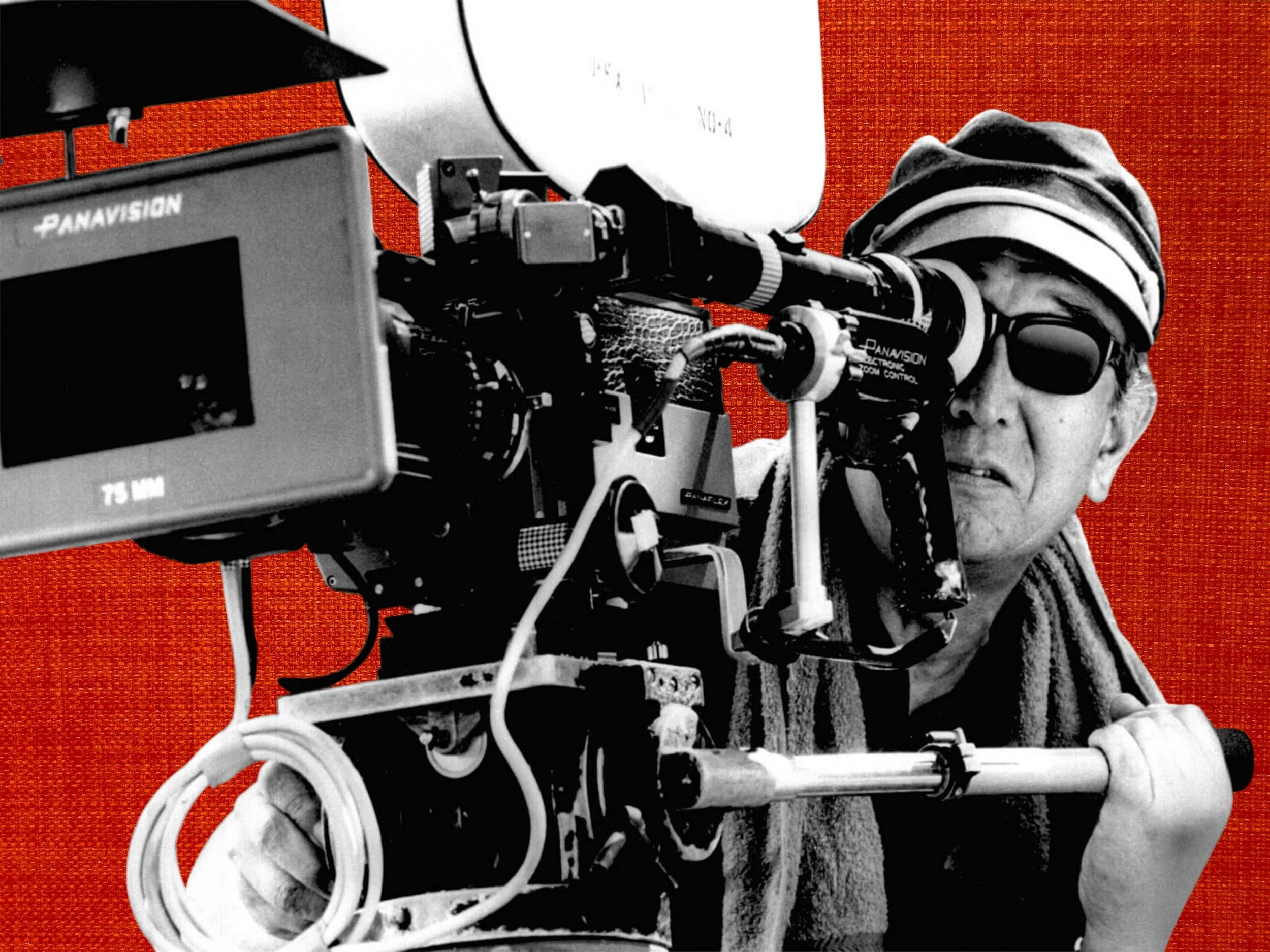
This man requires no introduction. Cinema, as the world knows it, would not be what it is without Akira Kurosawa. He is widely regarded as not only one of the best Japanese filmmakers of all time but also one of the most influential filmmakers of all time. So many genres, styles and franchises that have become embedded in modern Hollywood’s DNA can be attributed to him. What started as a stint making wartime films evolved into one of the most illustrious careers ever.
Kurosawa’s style has become synonymous with Japanese cinema, and his techniques have become commonplace within Western productions, but he himself has been known to be heavily influenced by the Western Cinema of his time. He is known for his bold and dynamic style, with signature edits such as wipes, matched jump cuts and cutting on motion. He is renowned for being incredibly hands-on in all aspects of production usually involved in directing, writing and editing for many of his films. He often tackles many pertinent themes, such as the cycle of violence, class conflicts, nature and legacy. Common tropes within his films include master-student dynamics, heroic champions and relationships with nature and the environment.
These films are the subject of this list, and given the man’s ability, it is incredibly difficult to narrow down the ten very best. So many of his films have gone on to influence countless modern-day masterpieces and a few of them could not make the cut. Here are a few honourable mentions that should also be given the spotlight.
The Hidden Fortress, released in 1958 which follows a General and two bumbling peasants who are helping to smuggle a Princess and gold through enemy territory. It is most well-known as the primary inspiration for George Lucas’ Star Wars, which became a billion-dollar franchise and one of the most successful IPs in the world.
Sanjuro, released in 1962, which is a sequel to Kurosawa’s 1961 action/thriller Yojimbo. It follows that film’s protagonist who must help a group of young samurai fight corruption within their clan. It is most well-known for its final duel, where an incident with a blood bag resulted in a stylized duel with blood exploding out which has since been mimicked by filmmakers.
Now, for the top ten, which can most certainly be considered as the best of the best.
10. Ikiru
Year: 1952 | Genre: Drama
Premise: Co-written alongside Shinobu Hashimoto and Hideo Oguni, this film follows Kanji Watanabe, played by Takashi Shimura, a middle-aged man who has worked in monotonous bureaucratic positions his entire life. His life is thrown into turmoil as he is diagnosed with stomach cancer, putting his entire purpose and legacy into perspective. He goes on a journey of self-discovery and dedicates himself a meaningful project: the construction of a playground for children.
Directing: The title translates as ‘To Live’ which gives you all you need to know about this film’s content. At the heart of this film is it’s central performance by Takashi Shimura which Kurosawa brings full attention to, but what makes this film stand out from others of its kind is both the subversions in its narrative and its biting social commentary. The direction and cinematography are all top-notcj as is to be expected, and there is a great sense of heavy atmosphere that permeates throughout the feature, only truly lifting in the film’s final act.
Kurosawa’s script is both one of his most heartfelt and most introspective. The major theme at play is the search for meaning in life when the shadow of death hangs over someone. The film’s final act brings this full circle, with a unique twist by focusing on the people Watanabe has impacted through his work rather than focusing on the death of the man himself. Even then, Kurosawa also throws in an indictment of Japanese bureaucracy; its inefficiency and inability to act swiftly which only enhances the weight of Watanabe’s actions and his ultimate legacy.
9. Rashomon
Year: 1950 | Genre: Crime/Thriller
Premise: Based on In A Grove by Ryūnosuke Akutagawa, the film explores the nature of truth as through various accounts of the same crime. Set in 11th century Japan, the plot sees four different versions of a samurai’s murder and a wife’s rape told by a woodcutter, a bandit, the wife and the samurai’s spirit.
Directing: A film so iconic that it invented an entire storytelling device that has gone on to be used by various filmmakers since its release. The Rashomon Effect isn’t something truly mind-blowing when delving into media beyond that of films, but it is nonetheless important that this film popularized its usage in filmmaking. Yet, the progenitor itself still holds up as a strong example of this technique in action, truly giving the audience a nuanced look into the nature of truth, interpretation and lies in just 90 minutes.
The device of viewing the same event from multiple different perspectives is already a captivating hook and is brought to life wonderfully by some strong performances from the cast. Each interpretation has both subtle and extreme differences, each telling the audience something about the characters testifying and it is up to the audience to truly decide what is the truest telling of the story. It continues to influence films even to this day and in a digital world where truth is muddled and interpretation is so often skewed by lies; it continues to be both an important meditation on such ideas as well as a strong work of filmmaking in its own right.
This film won the Golden Lion at the 12th Venice international film festival, and it later won the Best Foreign Language Film at the 24th Academy Awards.
8. Yojimbo
Year: 1961 | Genre: Action/Thriller
Premise: Co-written alongside Ryūzō Kikushima and Hideo Oguni, the film follows a nameless, masterless samurai or Ronin, played by Toshiro Mifune who enters a town where two warring crime gangs reign. He, alongside some of the townsfolk, pit the two gangs against each other in a bid to rid the town of corruption.
Directing: Before Sergio Leone’s trilogy about Clint Eastwood’s Man With No Name taking on criminals and bandits with quiet charisma, there was Kurosawa and Mifune delivering pulse pounding action with swords. Once again, the film is dripping with atmosphere and intrigue. Every moment with Mifune’s Ronin holds the audience’s attention with remarkable excellence. He commands the screen in every moment and this attention to character carries over to the village in general. The location is well-realised, each faction is well-developed and the characters are all distinct thanks to strong wit and violence.
The editing, cinematography and sound design are all superb, allowing for excellent narrative flow and strong tension building. Kurosawa masterfully escalates the conflict, culminating in an epic final showdown as our hero takes on almost everyone alone. The wide angle of Mifune, the lone hero, walking through an empty town in the centre of the frame mark the blueprint upon which many future Westerns have been made.
The film itself has been remade numerous times, most famous of which is Sergio Leone’s A Fistful of Dollars which went on to popularize the Spaghetti Western and spawned the critically acclaimed Dollars Trilogy which then went on to be a major influence on all Westerns to come. All of this can be traced back to Kurosawa’s work with Yojimbo which stands as a prime example of its genre.
7. Red Beard
Year: 1965 | Genre: Drama
Premise: Co-written alongside Masato Ide, Hideo Ogune and Ryūzō Kikushima and based on the 1959 short story collection Akahige Shinryōtan by Shūgorō Yamamoto, the film takes place in Koishikawa, a district of Edo towards the end of the Tokugawa Period. The story sees Noboru Yasumoto, played by Yūzō Kayama, a young physician who is fresh out of medical school who is disappointed at being posted at a small country clinic. Under the tutelage of the gruff doctor Red Beard, played by Toshirō Mifune, Yasumoto learns the unglamorous side of the profession as well as the true purpose of it all.
Directing: This is Kurosawa’s final collaboration with Toshirō Mifune and it is certainly one of the pair’s finest works. It is also Kurosawa’s last work in black and white. Where many of Kurosawa’s films have Mifune as a charismatic, chaotic and enjoyable protagonist, Red Beard is a character who is aged, mature and introspective. It is a role that Mifune plays perfectly and Kurosawa’s choice to view this story through the eyes of a young, up and coming physician allows the audience to experience the many epiphanies and discoveries alongside the protagonist.
Over the course of three hours, the audience is shown various cases that the pair have to work on, each one offering a different challenge to Yasumoto’s ideas and perspectives on medicine. He must tackle more than just disease and injuries but also the mental struggles of patients. There is a humanist quality to the film, pushing people to have empathy, patience and kindness for those less fortunate than ourselves. Kurosawa once again employs his tried and tested methods in order to make the population feel very real. The audience grows an attachment to these people just as Yasumoto does.
The film was nominated for the Golden Lion at the 1965 Venice International Film Festival and won Best Picture at the Blue Ribbon Awards.
6. Dreams
Year: 1990 | Genre: Fantasy/Drama
Premise: Written and directed by Kurosawa himself, this film is a series of visually rich vignettes drawn from Kurosawa’s own dreams. These short stories offer meditations on childhood, art, mortality, and humanity’s tumultuous bond with nature.
Directing: This was the first film in 45 years where Kurosawa was the sole writer, and it is also one of the last of his career. It is perhaps his best-looking film too, with a mastery of color that is utterly sublime. Each vignette feels incredibly distinct, yet all bare strong through-lines and consistent ideas. It’s a feast for the eyes, full of dazzling and striking imagery.
Despite the story format, Kurosawa manages to get across his key ideas in an efficient manner, putting forward consistent ideas such as humans’ relationship with nature, art, spirituality and mistakes. Whether it be men braving a dangerous blizzard, pushing them to the limit or Martin Scorsese as Vincent Van Gogh painting in a field and conversing with a student on how he cut his ear off for a painting. There is something memorable in each one, which means the film never grows stale. It stands as an incredibly unique film among Kurosawa’s filmography, and it is rare to find a film quite like it.
5. Throne of Blood
Year: 1957 | Genre: Action/War
Premise: Co-written alongside Shinobu Hashimoto, Ryūzō Kikushima and Hideo Oguni and based off William Shakespeare’s Macbeth, the film substitutes medieval Scotland with feudal Japan. The story sees Samurai warrior Taketoki Washizu, played by Toshirō Mifune, who is shown a prophecy by a spirit. When the first part of the prophecy comes true, his scheming wife Asaji, played by Isuzu Yamada, presses him to ensure the rest of the prophecy comes true by having him murder his lord and usurping him.
Directing: Perhaps Kurosawa’s greatest achievement as a writer and director is adapting a Shakespeare play into an entirely different time and place with an entirely different language and culture. Adapting Shakespeare is a far more daunting task than many realise as the core of his work is often his dialogue in the English language. It makes up the substance of every play and to deprive an adaptation of it would, on paper, deprive the work of everything that makes it art. And yet, Kurosawa manages just that task.
His take on Macbeth is full of atmosphere. The world is drenched in fog, leading to an air of dread and despair. The film takes the framework and core of the play and rather than simply transplanting them, putting its own spin on ideas Kurosawa places the culture of feudal Japan front and centre whilst retaining the same message in a completely different style. The film’s ending is unique and yet iconic in its own right and stands as a defining example of Kurosawa’s approach to adapting Shakespeare. And yet, this would not be the last time Kurosawa successfully adapts a work of Shakespeare.
The film was nominated for the Golden Lion at the Venice Film Festival.
4. Kagemusha
Year: 1980 | Genre: Drama/War
Premise: Co-written alongside Masato Ide, the film is set in the Sengokou period in Japan. The story showcases a thief, played by Tatsuya Nakadai, who is recruited to impersonate Shingen Takeda (also played by Nakadai), an aging warlord in order to avoid attacks by other clans. When Shingen dies, his generals agree to have the impostor take over as the ruler who begins to appreciate his new privileges. His authenticity in the role is tested when he must lead his forces into battle against the clan’s rivals.
Directing: Another one of Kurosawa’s works in color, this film offers an incredible narrative, breathtaking visuals and strong action. The story itself is full of scheming and complex politicking as various factions seek power and dominance, leaving the protagonists with little to do as their leader fails. The central performance by Tatsuya Nakadai is nothing short of brilliant, playing both the double and the original warlord effortlessly. It is enough to even make the audience buy into the illusion.
The tension throughout is palpable as the threat of the double’s discovery seems to close in around the protagonist. Many scenes of discussion happen in tight rooms, feeling more claustrophobic than the very heat of battle. But when battle does come, it looks amazing. The imagery is incredibly powerful and breathtaking. The scale is truly something to behold. At its core however is the ultimate tragedy of the thief, who upon discovery, is swiftly cast aside by those who put him there. Despite his good work, he is nothing more than a pawn in the machinations of war and politics. It is a gorgeous film, one that showcases some of the best of Kurosawa’s work, and yet it is only 4th on this list.
The film won the Palme d’Or at the 1980 Cannes Film Festival and was nominated for Best Foreign Language Film at the 53rd Academy Awards.
3. Seven Samurai
Year: 1954 | Genre: Action/Adventure
Premise: Co-written alongside Shinobu Hashimoto and Hideo Oguni, the film follows a village that has fallen on hard times and is routinely raided and taken advantage of by a group of bandits. In a bid for protection, the villagers enlist the help of an old samurai who gathers six others to help him teach the villagers how to defend themselves and prepare themselves for the coming siege.
Directing: What can be said about this film that hasn’t already been said? When Kurosawa is mentioned, this is the first film that comes to mind. It has laid the groundwork for countless films that have come after it, is regarded as one of if not the greatest action film of all time and has aged gracefully since its release. It is remarkable how a film so long can fly by so fast, but Kurosawa achieves such a feat almost effortlessly.
The long runtime affords ample time for every character. The villagers are all well-developed, so the audience feels invested in their safety. Each samurai is given ample screentime for the audience can become endeared to them. They are all unique and contribute to the group effort and everything comes together in a satisfying way. This means that the long, gruelling final act is as thrilling as it is nail-biting. The action feels non-stop and relentless, but the audience remains invested thanks to all the time spent developing the characters. Despite all that, Kurosawa still finds time to inject commentary on class, morality, gender and environment, developing each idea alongside the characters. It is a masterful balancing act and perhaps his greatest achievement.
The film was nominated for the BAFTA for Best Film and won the Silver Lion at the Venice Film Festival.
2. Ran
Year: 1985 | Genre: Drama/War
Premise: Co-written alongside Hideo Oguni and Masato Ide, and based on William Shakespeare’s King Lear, the film is set in 16th century Japan and follows aging warlord Hidetora Ichimonji, played by Tatsuya Nakadai, who divides his kingdom among his three sons. This leads to betrayal, war and chaos as the sons turn on each other and on him.
Directing: Yet another Shakespeare adaptation that somehow manages to succeed despite the radical changes to the core of the original story. It is also Kurosawa’s last epic. This film combines the atmosphere and adept scriptwriting of Throne of Blood and the scale, color and spectacle of Kagemusha, leading to a Shakespearean tragedy that is as beautiful as it is sorrowful. Once again, the visuals on display are utterly mind-blowing. Each frame is vivid and bold, and the battles are both chaotic and thrilling.
The core of King Lear remains intact whilst also employing exclusive storytelling devices of its own to great effect. The performances are all excellent, but the two standouts are Tatsuya Nakadai as Lord Ichimonji and Mieko Harada as Lady Kaede, the latter of whom is one of Kurosawa’s finest characters. It feels repetitive to say that this film is a masterpiece, but it goes to show how many of Kurosawa’s films are worthy of such a title. Ran stands as perhaps his most impressive work visually speaking and one of the greatest films ever made. Yet, it sits at number 2.
The film won the BAFTA for Best Foreign Language Film and Kurosawa won Best Director from the National Board of Review. He also received a nomination for Best Director at the Academy Awards, his only nomination.
1. High and Low
Year: 1963 | Genre: Thriller/Crime
Premise: Co-written alongside Hideo Ogun, Ryūzō Kikushima and Eijirō Hisaita and based on the novel King’s Ransom by Evan Hunter, the film tells the story of Japanese businessman Kingo Gondō, played by Toshirō Mifune, who is struggling for control over the major shoe company of which he is a board member. He plans a buyout of the company with his life savings, but his plot is thrown asunder when a kidnapper mistaken abducts his chauffer’s son and demands a ransom of ¥30 million.
Directing: At last, there is High and Low, yet another masterwork from a masterful director. As a crime thriller, it is intense and gripping. From start to finish, the momentum is propulsive to an extent no other film of his can match. The tension remains at a constant high, never letting the audience rest easy. The first half is a masterclass in tension, character work and filmmaking. Every actor brings their best, especially Mifune as the lead. The film serves as a strong character study, showcasing Gondō’s transformation from ambitious businessman to humble citizen. He battles with his own greed and desires whilst attempting to do the right thing despite the fact that his own kin aren’t in any immediate danger. The second half then becomes an engaging police procedural, with many layers to the kidnapper’s plot and an ending scene that will stay with viewers forever.
At its heart, there is biting commentary of class divide. The kidnapper could easily be viewed as sympathetic, given that he is taking on a greedy businessman. As Japan evolves economically, the rich only get richer and the poor are left to watch from the streets as the ivory tower grows taller. The simple detail of Gondō’s home sitting atop a hill carries so much significance to the narrative, both literally and thematically. Kurosawa’s humanism shines through and it is no wonder that this film has been long remembered as one of the greatest of all time. From beginning to end, it is Kurosawa’s finest work.
It was nominated for the Golden Lion at the Venice International Film Festival and won Best Film and Best Screenplay at the Mainichi Film Awards.